
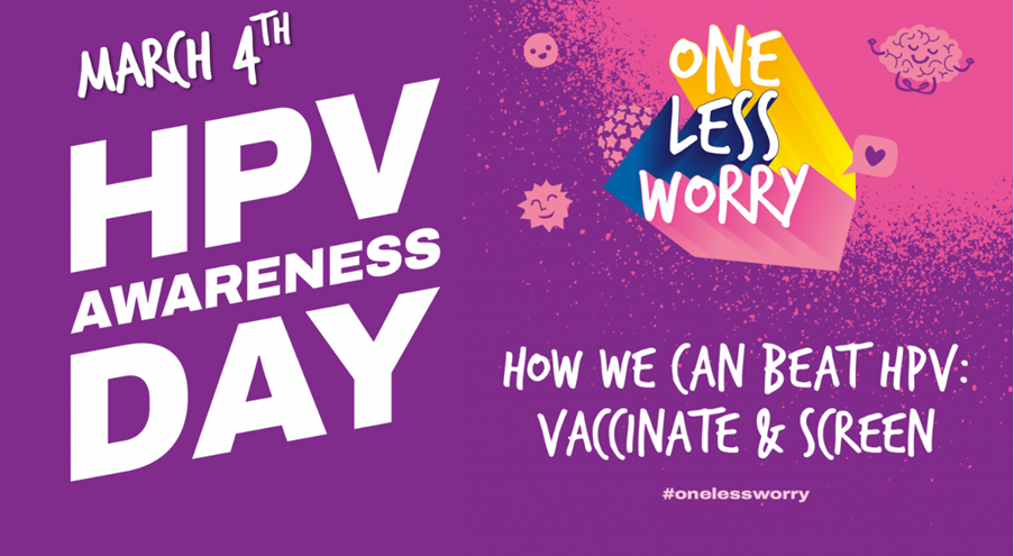
One of the biggest steps forward in the fight against cancer over the last few decades has been the introduction of the HPV vaccination.
HPV - human papillomavirus - refers to a group of common viruses which most people will come into contact with at some point in their lives. Most HPV infections go away on their own, and cause no problems, but some of the “high-risk” types of HPV are a driving force of certain cancer types, in both men and women.
The most common HPV driven cancer is cervical cancer, with over 99% of cases driven by HPV infection. This means that cutting HPV infection rates would dramatically reduce incidence of cervical cancer, potentially saving more than 50 lives in Wales every year.
The HPV vaccination was introduced into Wales to 12-13 year old girls in 2008 (this was extended to include boys in 2018), meaning that now all women under 30 should have been offered the vaccination whilst they were at school.
Whilst the World Health Organisation recommends that 90% of children should have received the HPV vaccination by age 15, at the moment only 75% of those in Wales have had it. Whilst this doesn’t quite reach the uptake levels required to protect those who are unable to receive the vaccine for medical reasons, even at this rate it will only be a few more years before we begin to see the impact of this on cancer incidence rates in Wales.
However, there has been some reporting that women who have had their HPV vaccination are less likely to attend their cervical screening appointment because they think that they are completely protected against HPV. Unfortunately, this is not the case. The HPV vaccination is one of the most effective vaccinations we have, but it is still only 90% effective at preventing HPV infection when given to young teens and becomes less effective the later it is given. Additionally, the vaccination doesn’t protect against all types of high-risk HPV so there is still a risk. Ideally, all 12-13 year olds would have the opportunity to receive the jab and be educated to know that attending screening when they turn 25 is still essential.
At Tenovus Cancer Care we have also heard from our community engagement work that there is a common belief that women who are not sexually active do not need to attend their screening as there is such a low risk of HPV infection. We at Tenovus Cancer Care think that this narrative may be harmful, as within some communities this could make people feel shame or embarrassed about attending their screening appointments.
In order to really make the most out of the opportunity presented to us by the introduction of the HPV vaccine, it is incredibly important that everyone eligible is offered the vaccine and are educated on the benefits, and that those over 25 attend their screening appointments. Together these would mean that cervical cancer risk will plummet and that any cervical cancers which do arise will be treated as early as possible.


